TL;DR
- On November 27, at its House of Instagram creator event in Mumbai, Meta said Instagram for TV will reach supported Apple TV, Fire TV and Google TV devices in India "in a few days from now." India is the first country outside the US named for the app.
- Meta sells the app as a shared experience: "Friends and family watch together, pass the remote, and swap recommendations in real time." Its announcement says nothing about ads, pay, or how a Reel watched by a whole room is counted.
- Eleven days earlier, YouTube began adding estimated co-viewers to public view counts on TV screens. India's own TV research says more than 80 percent of connected TV viewers there watch with family or friends. Instagram is entering the living room just as the question of who counts as a viewer stopped being academic.
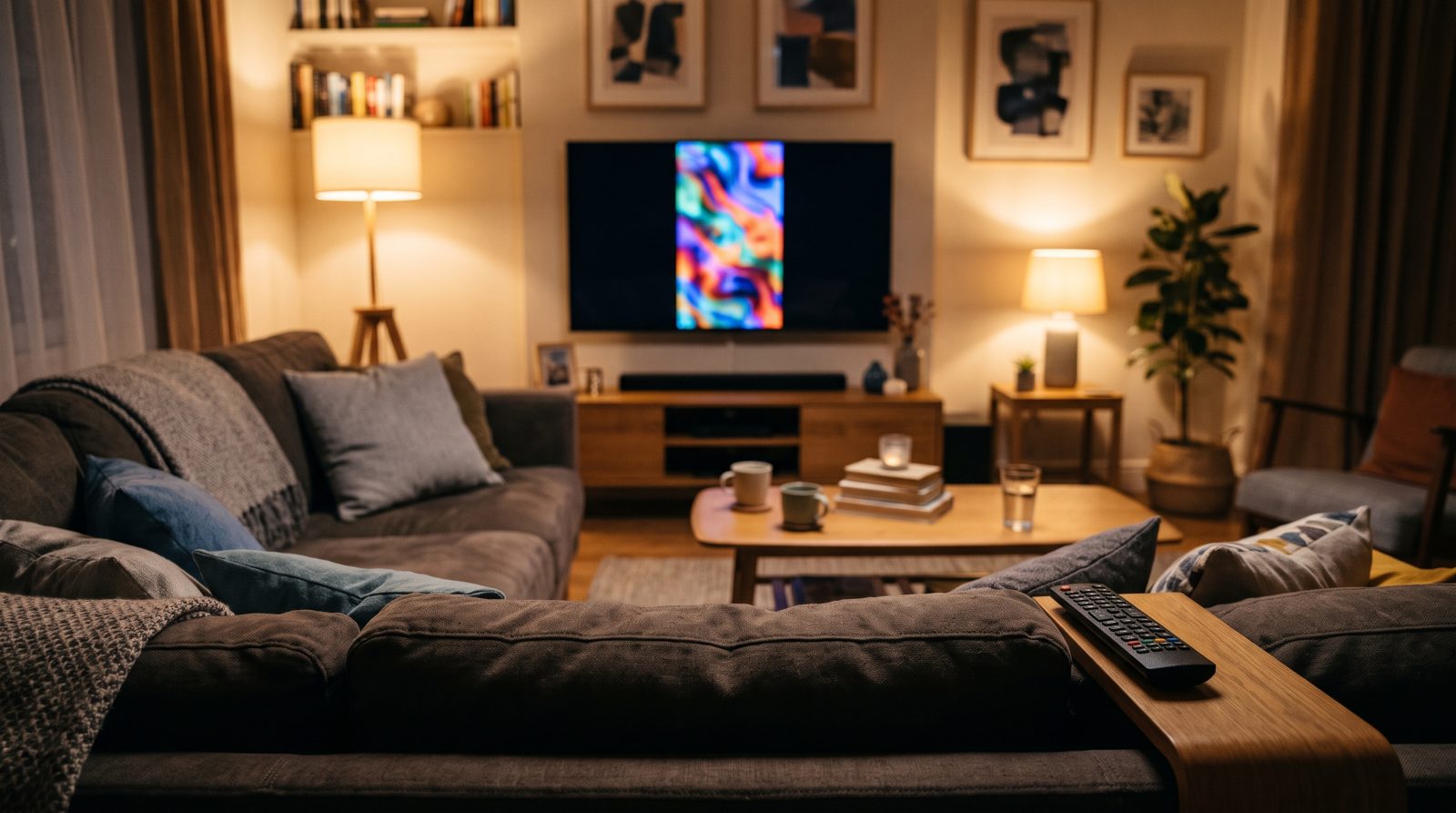
Meta's pitch for its newest app is an evening at home. Reels play on the big screen one after another without anyone touching anything, and the remote moves around the room. "Friends and family watch together, pass the remote, and swap recommendations in real time," the company wrote in its newsroom post on November 27, the day it told a room of creators at House of Instagram in Mumbai, which it calls its annual creator event, that Instagram for TV is coming to India.
The facts of the launch are simple. The app will be available on supported Apple TV, Fire TV and Google TV devices "in a few days from now," according to Meta. It focuses on Reels and Stories, including horizontal Reels that fill a widescreen, and it lets each television hold up to five Instagram accounts, or a separate account made only for TV. Coverage from afaqs, Storyboard18 and PPC Land all describe the same feature list, and none of them found a fixed date, a price or an ad product.
Most of the reaction has followed a familiar script: a new screen means new reach, and Indian creators get a bigger stage. That is probably true in the broad sense. But the sentence Meta chose to sell the app hides a question that nobody in the announcement answered. If the whole point is that several people watch together, who does Instagram think is watching? Every number a creator sees in Insights, and every signal the ranking system learns from, is tied to an account. A living room is not an account.
This piece is about that gap. It covers what Meta actually announced, how Instagram's ranking reads attention, why YouTube decided this month that one TV play can be several views, why India in particular makes the problem bigger, and what a creator can do while the counting rules are still unwritten.
What Meta announced, and what it left out
Instagram for TV is not new, only new to India. Meta began testing it on Amazon Fire TV devices in the US on December 16, 2025, describing the pilot as a way to learn how people want to watch short video on a larger screen. Google TV devices followed on February 24, 2026, according to Instagram's own announcement page and TechCrunch. Samsung smart TVs from the 2020 model year onward were added in the US in June, and in late October the app showed up on the Apple TV App Store with no announcement at all, a change MacRumors spotted in the listing. Until this week, every version of it was American.
The India version, per Meta's post, keeps the core of the US app and adds to it. Reels are grouped into channels built from your interests, what is popular, and accounts you follow. Reels play automatically, so you can watch without steering the remote to each one. There is search for creators. Profiles show Reels, photos, carousels, bios and follower counts, subject to each account's privacy settings. A Friends tab, which Meta says "brings content from people you follow and videos popular with friends into the TV experience," collects social picks in one place. Casting from a phone works when the phone and TV share a Wi-Fi network, with availability that varies by device.
The teen rules carry over. Meta says Reels on the TV app "generally follow the 13+ Content Ratings system" in what it calls "this test," and that time spent on Instagram for TV contributes to a Teen Account's overall usage limits, with the same reminders as on a phone. That detail connects to a story we covered this week: Meta's teen time cap was already estimated by researchers to reach only a small share of teens, and the television is now one more screen feeding the same meter.
Then there is the list of things the announcement does not contain. It does not mention advertising, sponsored posts or how branded partnership content appears on a TV. It does not mention pricing. It does not say whether a Reel watched on a television is counted the same way as one watched on a phone, whether creators can see TV views separately in Insights, or whether anything about a TV view is weighted differently in ranking. PPC Land, which compared the India post against Meta's earlier US announcements, reached the same conclusion: those questions are simply not addressed.
The launch post describes a room full of people. Everything it is silent about is what happens to the numbers that room produces.
How Instagram reads attention
To see why that silence matters, start with how Instagram decides what you see next, because the company has been unusually specific about it.
In August 2024, Instagram head Adam Mosseri said views would become the primary metric across Reels, photos, carousels and Stories, so creators could compare formats with one number. In the same announcement he drew a line that matters here: a view is not the same as reach, because one person can view the same piece of content several times. He paired views with a second metric, sends per reach, the rate at which people who see a post share it in a direct message, and called the two probably the most important metrics for understanding how content is doing on Instagram. Tubefilter, Social Media Today and PetaPixel all reported the change in those terms.
In January 2025, Mosseri went further in a video for creators, as Social Media Today reported. He named three signals that matter most for ranking: watch time, likes per reach and sends per reach. Likes, he said, count slightly more for content shown to followers, and sends count slightly more for content shown to people who do not follow you yet. We broke that down in our guide to how the Instagram algorithm works.
Notice what all three signals have in common. Each one is an action taken by one logged-in account. Watch time is the time a particular account spends on a Reel. A like comes from a thumb attached to a profile. A send is one person picking another person in their DMs. The ranking system is, in effect, a machine for reading individual intent from individual behavior, and that is also why sends carry so much weight. A send is the clearest proof that a real person cared enough to pass something on, which is why we argued that creator reach runs through DMs when Meta started testing a separate messaging app.
Now put that machine in a living room. The account signed in on the TV belongs to one person, or to the household, or to the "TV only" account Meta suggests. Unless someone casts from their own phone, the person holding the remote is the only one whose choices reach Instagram. TechCrunch reported in February that the US app lets viewers like Reels, read comments and reshare from the TV, but nobody on the couch is going to type a DM with a remote, and the three people sitting next to the remote holder have no way to tell Instagram anything at all.
Here is the image worth keeping in mind. Instagram's whole measurement system sees the hand on the remote. It does not see the couch. On a phone, the hand and the viewer are the same person, so the distinction never mattered. On a television, they come apart, and Meta's own marketing line, "pass the remote," is a description of exactly that.
The turn: the room is the audience, the account is the measurement
The usual frame for a launch like this is distribution: a creator's Reels now play on a bigger screen, so the creator wins. The frame is not wrong, but it assumes the numbers will follow the audience. On a TV they may not, and the error can run in either direction.
Think about it from the creator's side first. A comedy Reel plays on a family television and four people watch it to the end. If Instagram counts this the way it counts phone views, the creator gets one view and one account's worth of watch time. The other three viewers, the ones a brand would most like to know about, are invisible. If those same four people had each watched on their own phones, the creator would have four views, four chances at a like and four chances at a send. The TV version reaches more people in a room and reports fewer of them.
Now think about it from the ranking system's side. Autoplay means a Reel can run to the end because nobody reached for the remote, not because anyone was riveted. On a phone, a Reel that plays to the end usually means someone chose not to swipe. In a living room, it can mean the remote was on the table and everyone was talking. Watch time, the signal that moves to TV most intact, becomes noisier at the same moment sends mostly fall away and likes shrink to one account's worth.
And then there is taste. If a parent, a teenager and a grandparent share the account on the TV, the system learns from a blend of all three, or rather from whoever had the remote. The app's design suggests Meta knows this: it offers up to five accounts and a separate TV-only account. That is a sensible fix for recommendations. It is not a fix for measurement, because the room still shows up as whichever single account is signed in, and the others on the couch do not exist as far as Instagram's numbers are concerned.
On a phone, one view means one person. On a television, Instagram has not said what a view means, and its announcement is built around the case where the answer matters most.
YouTube counted the couch first
The reason this is not a thought experiment is that YouTube has just answered the same question, in public, and changed its numbers to match.
On November 16, YouTube's Creator Insider channel announced that public view counts would now include co-views, which it defined as "the estimated number of people watching together on TV." YouTube's Help Center now says public view counts on watch pages "incorporate co-views by estimating the number of individual viewers watching together on TV screens." The change applies only to TV playback. A view on a phone, tablet or computer still counts once. The stated reason, in YouTube's announcement as reported by PPC Land, is that viewers now watch more than a billion hours of YouTube on TVs every day, a figure YouTube has cited since chief executive Neal Mohan used it in his annual letter in early 2024.
The mechanics are worth reading closely, because they show how many separate numbers a single "view" can split into. According to YouTube's Help Center and coverage by PPC Land and others, the public count includes co-views, and so does watch time. Engaged views and unique viewers do not. Creators get a new "co-view rate" in their analytics, so they can divide the public number back down to an estimate without co-viewers. A separate creator-only metric, "Views (Co-viewed)," was introduced in September. And the Help Center is explicit about money: "This update won't impact your YouTube Partner Program (YPP) earnings or eligibility," with earnings still based on engaged views and engaged watch hours.
The estimate is modeled, not measured. YouTube has not put a sensor in anyone's living room. Coverage of the September launch video described a statistical model built on demographic patterns, the type of video and the time of day. Google's ad business got there first: on June 2, Google Ads moved its connected TV reach and frequency metrics to what it calls a "Total Co-view" definition, built on TV panel data and surveys, and framed the move as alignment with offline measurement standards. In other words, the advertisers' side of Google already counted the couch before creators' public numbers did.
That leaves the industry with a split view count. YouTube's public number on a TV is now an estimate of people. Its pay is based on a narrower count of engaged views. And Instagram, which has not announced any co-viewing measure, reports something else again. We wrote two weeks ago about the ad industry's push for one definition of a view. Since then, YouTube has folded a modeled estimate of extra people into one of the two counts it already used, and Instagram has announced a TV app for a market where most connected TV viewers watch with others.
Pocket glossary: five ways to count one Reel on a TV
- Play. The video started on a screen. On YouTube, since August 24, a public view can be counted from the first frame.
- View (Instagram). Instagram's primary metric since 2024. Mosseri has said one person can produce several views of the same post. Meta has not said how a TV play is counted.
- Reach or unique viewers. The number of distinct accounts that saw the content. One account on a shared TV is one viewer here, however many people are on the couch.
- Co-view. YouTube's modeled estimate of extra people watching together on a TV, now added to public view counts and watch time, but not to engaged views, unique viewers or pay.
- Engaged view. YouTube's narrower count used for Partner Program earnings. It excludes co-views, which is why a TV-heavy channel's public count and its pay can drift apart.
Why India makes the gap wider
If Meta had launched in a market where people mostly watch TV alone, the co-viewing question would be a footnote. India is close to the opposite case, and the evidence comes from the TV advertising industry itself.
In August, WPP Media and The Trade Desk published a study, run by Ormax Media and titled "The Connected TV Era: India's New Prime Time," that put India's connected TV audience at 207 million viewers across an estimated 62 million to 65 million households, roughly three times its size in 2022. Social Samosa and Indian Broadcasting World both reported the same headline findings. The one that matters most here: more than 80 percent of India's connected TV viewers watch with family or friends. The study estimated that a single connected TV ad impression reaches about 2.5 people, against an average connected TV household of 3.3. Growth was fastest outside the big cities, with rural audiences up 110 percent.
Read those numbers next to Instagram's measurement model and the problem becomes concrete. If one TV play in India typically has more than two people in front of it, an account-based count could understate a creator's real TV audience by more than half. That is a rough reading of a single study about ads rather than Reels, and the true ratio for short video may well be different. But the direction is not in doubt, and the people who sell TV advertising in India already measure it. Rajiv Rajagopal, who heads advanced TV at WPP Media, said when the report was released that "India's television market has reached an inflection point."
There is a history here too. Instagram did not invent short video in India; it moved into a space TikTok left behind. India banned 59 apps with Chinese links, TikTok among them, on June 29, 2020, a ban covered at the time by TechCrunch and CNN. TikTok had more than 200 million Indian users, TechCrunch reported. Instagram began rolling out Reels in India on July 8, 2020, as a test market. Six years later India is again first in line, this time for the living room.
And in India, the TV is where Instagram's recommendations will land in front of several people at once. Less than two weeks ago, Meta said it had tuned Instagram's recommendation systems specifically for India to show less sexually suggestive and violent content to people who do not follow an account. We looked at how thin the public evidence for that change was in our report on Instagram's India reach changes. On a television, the channels of recommended Reels play for a whole family, under the 13+ ratings Meta describes. The pressure on what gets recommended to non-followers in India is unlikely to ease once those recommendations are on the biggest screen in the house.
India is not just a big new market for the TV app. By its own TV industry's numbers, it is a market where the gap between an account and an audience is unusually wide.
The numbers behind the living room, and their limits
It is easy to see why Meta wants this screen. The figures are large, and they mostly belong to YouTube.
In May, YouTube said viewers watch more than 2 billion hours of Shorts on TVs every month, as TechCrunch and Android Headlines reported. Kurt Wilms, YouTube's senior director of product management for TV, called the living room "YouTube's fastest-growing screen." In the US, Nielsen's monthly Gauge, published on October 22, gave YouTube a record 15.8 percent of all TV viewing time in August, as reported by PPC Land and Bottle Rocket, about twice Netflix's 7.7 percent. When TechCrunch covered Instagram's Google TV launch in February, it described the app as Instagram trying to compete better with YouTube, which dominates TV, and noted that TikTok already has a TV app of its own.
Each of those numbers comes with a caveat that should travel with it. YouTube's Shorts figure is YouTube's own, and it covers all TVs worldwide, not India. Nielsen's Gauge measures the US, and Nielsen itself said the August edition was the last under its current method before an adjustment from September. The India study comes from an advertising group and an ad-tech company whose business includes selling connected TV, and it measures ad impressions, not short videos. And we could find no usage numbers for Instagram for TV published by Meta, not for the US after eleven months of testing and not for India.
That last gap matters most. After eleven months, three announced US platforms and a quiet Apple TV release, Meta has not said how many people use the app, how long they watch, or what share of Reels viewing happens on a TV. It is possible the numbers are small. It is also possible they are large and Meta does not yet want to say how it counts them. Either way, a creator trying to plan for the TV screen today is working without the most basic figure.
Of the two platforms, only the one Instagram is chasing has published how it counts a shared TV view.
What we know, and what we don't
What is confirmed: Meta announced Instagram for TV for India on November 27 at House of Instagram in Mumbai. It will run on supported Apple TV, Fire TV and Google TV devices, with no fixed date beyond "a few days." Samsung TVs, which carry the app in the US, are not on the India list. It supports up to five accounts per TV, a TV-only account, channels, search, a Friends tab, casting and horizontal Reels. Teen usage on the TV counts toward Teen Account limits. These details come from Meta's own post and match independent coverage.
What is confirmed about the competition: YouTube adds estimated co-viewers to public view counts on TV screens, keeps them out of engaged views and pay, and gives creators a co-view rate to strip them back out. Google Ads counts co-viewers in connected TV reach for advertisers.
What is not known: how Instagram counts a TV view, whether TV viewing is broken out anywhere in creator Insights, whether watch time on a TV carries the same weight in ranking as on a phone, whether Meta will sell ads inside the TV app, and whether creators in India will see any money tied to TV viewing. Meta's post also calls part of the experience a test, so features may change by country and device.
There is one more thing we cannot tell you, and it is the honest limit of this piece. We do not know that Instagram counts a living room as one viewer. We only know it has not said otherwise, that its metrics are built on accounts, and that its biggest rival decided this was a problem worth fixing in public. If Meta publishes a co-viewing method, the gap this piece describes narrows. Until then, a creator's TV audience on Instagram is a number nobody outside Meta can check.
A working plan for creators while the rules are unwritten
- Read TV as a watch-time screen, not a send screen. On a phone, a Reel that people send to friends travels. On a TV, the send mostly disappears, and what survives is whether the room kept watching. Strong openings and a reason to stay to the end matter more on the big screen than a clever call to share. If your engagement strategy leans almost entirely on sends, a growing TV audience may not show up where you expect it.
- Frame for both shapes. The India app plays horizontal Reels in widescreen, and Instagram has been building toward horizontal, longer video with its Features test. We covered why Instagram's long-form checks are not a pay plan, but the format push is real. Keep text and faces inside a safe central area so a vertical Reel still reads on a TV and a horizontal one still works on a phone.
- Make it work with the sound on and the room listening. TV Reels autoplay one after another for a group. Content that only lands with captions read up close, or that makes sense only to one person, loses the room. Content that a family can follow from across the sofa keeps it, and it is more likely to sit comfortably inside the 13+ ratings Meta applies on TV.
- Do not read a dip as a loss, or a jump as reach, until you know the source. If more of your audience shifts to a shared screen, your account-level numbers could fall even while more people see your work. Watch your Insights over weeks, not days, and compare watch time with views. Our guide to Instagram analytics walks through the core metrics and where to find them.
- Be precise in brand deals. When a brand compares your Instagram views with a YouTube channel's, ask whether the YouTube figure includes co-views. Since November 16 it may, and YouTube's own co-view rate exists to divide it back down. Brands are spending heavily on creators, as the $116 billion estimate of marketer spending showed, and the difference between a modeled audience and a counted one belongs in the contract.
- Keep the phone in the loop. Casting starts on a phone, and the Friends tab is built from what people you follow share and watch. The social actions that feed the TV still happen on a handset. A Reel that people share on mobile has a plausible route onto the living room screen through the Friends tab, which Meta says draws on videos popular with friends.
- Ask Meta the question in public. Meta published a detailed engineering explainer of its Your Algorithm system this month, which shows the company will explain its machinery when it chooses to. Measurement deserves the same treatment. A simple, repeated question at creator events, "how do you count a TV view, and can I see it in Insights?", is the kind of thing a platform eventually answers.
Who holds the remote
For most of Instagram's life, the person holding the phone and the person watching were the same, so the platform never had to choose between counting hands and counting people. Its whole ranking system, from watch time to sends per reach, grew up on that assumption, and it worked because the assumption held.
Instagram for TV breaks it on purpose. The scene Meta chose to sell the app, a room full of people passing the remote and swapping recommendations, is exactly the situation its measurement cannot see. YouTube, faced with the same couch, decided to estimate the people on it and to tell creators how. Meta has not yet said what it will do, and it is launching in a country where most connected TV viewers watch with others.
So the useful way to think about the TV app is not as more reach, at least not yet. It is a new audience that arrives without a clear count. Creators who treat the TV as a place to win the room, and who keep asking how that room is measured, will be better placed than those waiting for a number to tell them it worked. The remote only tells Instagram who was holding it. The audience was always the rest of the couch.
FAQ
When does Instagram for TV launch in India?
Meta announced it on November 27, 2026, at House of Instagram in Mumbai and said it would arrive on supported Apple TV, Fire TV and Google TV devices "in a few days from now." It has not given a fixed date, and Samsung TVs are not on the India device list.
Does a Reel watched on TV count as a view for creators?
Meta has not said how TV plays are counted, whether they appear separately in Insights, or whether several people watching together are counted at all. Instagram's metrics are built on accounts, so on a shared screen only the signed-in account is visible to the platform.
What are YouTube co-views?
Since November 2026, YouTube adds a modeled estimate of extra people watching together on a TV to public view counts and watch time. Co-views are excluded from engaged views, unique viewers and Partner Program pay, and creators get a co-view rate to remove them from the public number.
Do teen screen-time limits apply on Instagram for TV?
Yes. Meta says time spent on Instagram for TV counts toward a Teen Account's overall usage limits, teens get the same reminders as on mobile, and Reels on the TV app generally follow the 13+ content ratings used on the phone app.